

















Holocaust survivor Sami Steigmann discussed his survival in a German concentration camp, Thursday, April 2, in the Film Lecture Hall.
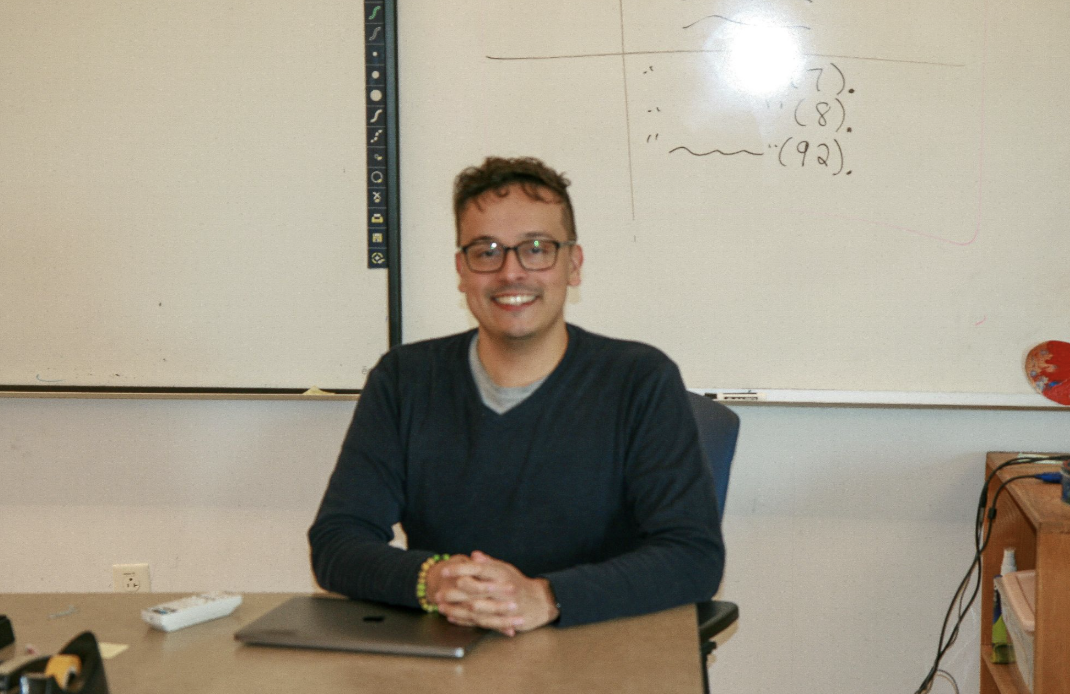
“Through listening to survivors’ stories, we are able to humanize their experience and use it as a reminder of where hate and discrimination can lead if we are not vigilant,” said history department head Gregory Drake, who organized the speaker event.
Stiegmann is a motivational speaker who shares his story at schools and conferences across the Northeast.
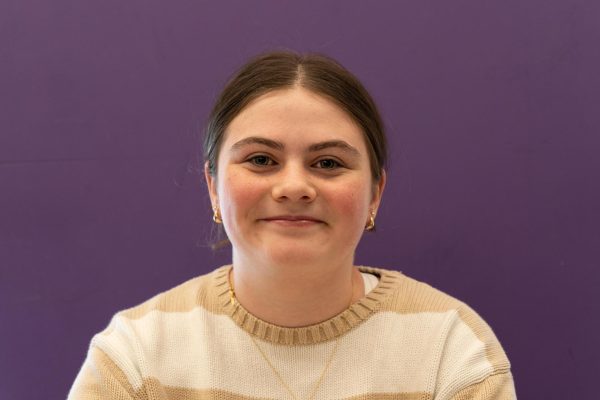
“I feel like most of the times when I’ve heard Holocaust survivors talk, they mostly talk about their past experiences. However, Steigmann talked more about how he uses his experiences to improve himself and the world around him,” said freshman Iyla Nguyen.
When he was less than two years old, Steigmann and his parents were deported from their home in Romania. Steigmann was taken to a concentration camp, Mogilev-Podolsky, where he was subjected to medical experiments and extreme starvation.
“I am not what happened to me. I am what I choose to be,” Steigmann said.
Steigmann added that while he cannot remember the experiments because he was young, they resulted in chronic pain that has followed him for his entire life.
“I am and will be every day for the rest of my life in pain,” Steigmann said.
He added that life in the concentration camp was a constant battle of survival because he and his parents were almost always on the brink of starvation.
Steigmann added that he survived through luck, since he was never separated from his parents while he was at Mogilev-Podolsky. He also credited one woman for saving his life.
According to Steigmann, the woman lived on a farm near the concentration camp and was tasked with feeding the SS soldiers and Ukrainian guards. However, when she saw him and recognized that he was dying of malnourishment, she risked her life to sneak food to him.
Steigmann said that he never knew her name or what happened to her. However, when he visited the Garden of the Righteous Among the Nations, a remembrance garden for non-Jewish people who risked their lives to save Jewish people during World War II, he was happy to see a stone slab that recognized the “unknown” upstanders of the Holocaust.
According to Steigmann, he and his parents were liberated from the concentration camp by the Soviet Red Army in 1944. However, there were countless victims who never made it out of the camps. From 1933 to 1945, the Nazi regime murdered 11 million people, including six million Jewish people.
“I think that in a time where antisemitism is rising globally, it’s really important to learn about Jewish history, not just for Jews but for everyone so that history won’t repeat itself,” said freshman Sasha Milanowyz, who attended the talk.
Despite the challenges that Steigmann encountered during his life, from his experiences in the Holocaust to homelessness, he continues to have an optimistic outlook on life. He devotes his time not only to educating young people and others about his story, but also inspiring them to make change in the world around them.
“I see you as future leaders in our country and I believe in you,” Steigmann said.
He also encourages people to speak up against injustice and never be a bystander. “The Holocaust happened because so many people stood aside and did nothing,” he said.
According to Nguyen, the most meaningful part of Steigmann’s speech was his emphasis on not being a bystander. “I think it’s so important for young people to realize the impact of their actions and how they can make a difference,” Nguyen said.
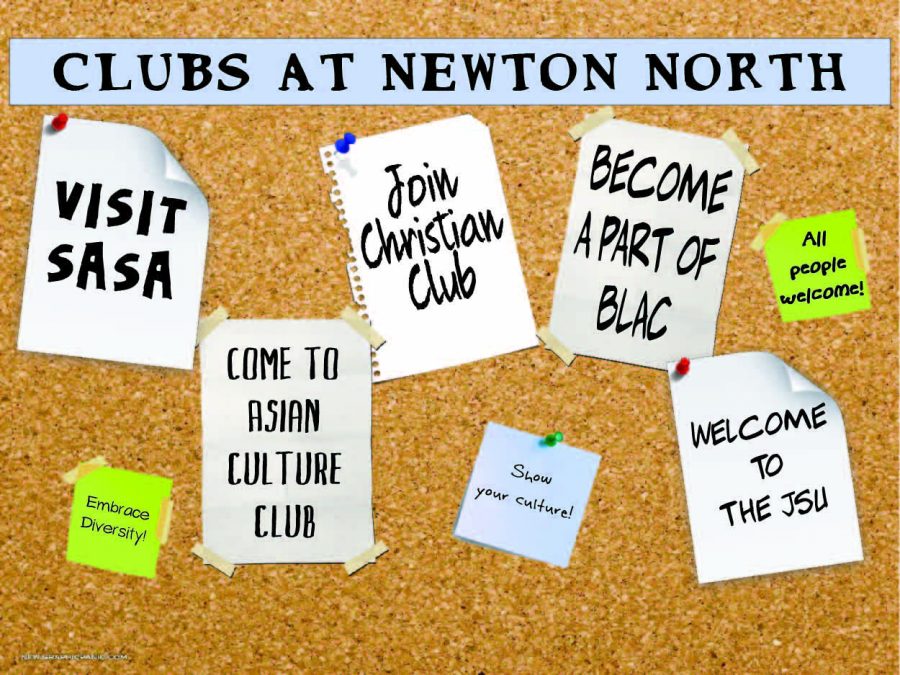
During the speaker event, Steigmann encouraged North students to embrace their heritage and culture. He said that he is proud of being both a Romanian-Jew and an American.
Milanowyz said, “I think that in society Jews are often told to turn down our culture because it stands out, especially in places with less Jews than Newton, and I think it’s really important to embrace our culture even when it may not be the societal norm.”